
So Sure, Yet So Wrong
On being wrong, and why it hurts more than it should
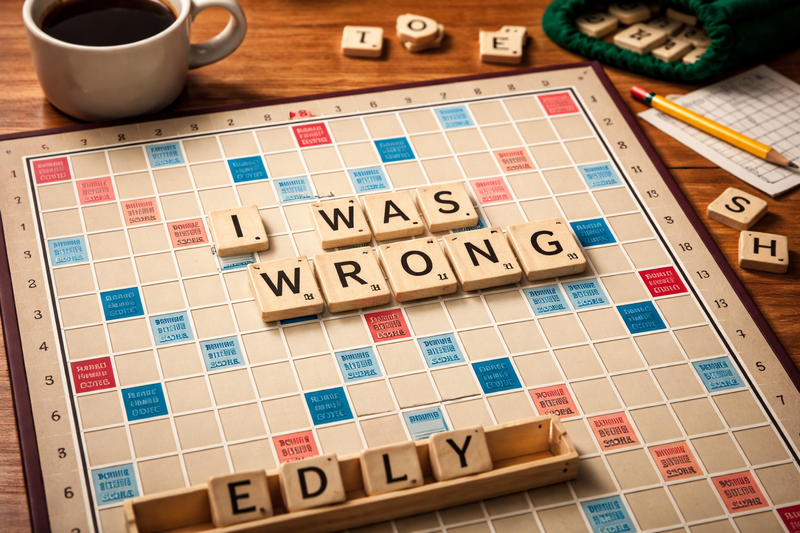

It was the middle of the night. My feet were turning cold and my chest continued to tighten. I couldn't understand why the bare memory of something that happened over six months ago would elicit such a reaction within me. Why did it feel so bad to have been… wrong? I needed to get to the bottom of this. So, as a self-proclaimed scientist, I began to come up with my hypothesis.
In class, when you get a question right, the other students are asked to clap for you. You hear their resounding claps and it's like the whole world is turned toward you, bowing their heads, saying "Our Lord, there is none like you." You're indeed the man of the hour. And if you could have your way, you never want it to stop. So what do you do? You strive to get more answers right.
On the other hand, when a particular student perpetually gets answers wrong, the silence is loud. There are no resounding claps, the teacher is not smiling, and they have that look on their face that says "how can you be so dumb?" They're not saying it out loud, but they don't need to. Everyone knows they're thinking it. And before you know it, nobody wants to be friends with the "dumb" person. At break time, they're sitting alone with no one to play with.
You quickly learn, even as a child, what it means to be successful. It's pretty easy to figure out. You just need to… always… be… right.

The Dunning-Kruger Effect
You’re a grown adult now. You’ve worked so hard to get here. In fact, you’ve been right so many times that you’ve earned the silent title of “Mr. Right”. People don’t clap for you anymore when you get something right, but you harness the claps from their nodding heads and smiling faces because as far as you’re concerned, you’re dropping answers like bars.
You could never be wrong. When anyone dares suggest you are, according to Kathryn Schulz, it's one of three things: they either don't have all the information you have, aren't intelligent enough to reach the same conclusions, or are being disingenuous — knowing the right thing but claiming otherwise for personal gain.
This screams the Dunning-Kruger effect to me. It’s when people know enough to think they’re right but not enough to know they’re wrong and so over-estimate their own capabilities. No wonder, when other people make mistakes, we’re quick to say “It’s alright, everyone makes mistakes”, but when we do, we have a heart attack, because…. how dare we… be… wrong?
Defending the Throne
When someone challenges your position, something primal kicks in. You've spent years being right, that is your fame, and now someone is threatening to take that away from you. As Will Smith once said, becoming famous is "amazing," staying famous is a "mixed bag," and losing fame is "miserable."
So you fight. You go and research more points to strengthen your argument. You gather all the facts and data that support your case. At some point, you're no longer looking for truth, you're just looking to be right. You fight tooth and nail like your life depends on it, all because being wrong feels like losing something. Respect? Status? Your identity?
But what if being wrong wasn't a loss? What if it was actually the cost of admission to something better?
The Legend of the Seeker
The solution to all of this might be simple. What if we approached things with the mindset of “I could be wrong”? Wait, are those your insides revolting? Please, don’t have a heart attack, I beg you. Drink some water, and keep reading.
What if instead of building a reputation for being right, you built a reputation for being the seeker of truth? Not the person who always has the answer, but the person who's genuinely after it, even when the trail leads somewhere uncomfortable.
Reminds me of the legend of the seeker, a movie I enjoyed watching as a teenager. Oooof! I seem to be reminded of a lot of things writing this post. I'm not surprised though — this post started off the back of remembering a time when I was wrong. I should probably title it "The Epistle of Remembrance." I digress.
I don't want my chest to tighten anymore at the thought of being wrong. I want to feel alive instead, because being wrong means I'm likely inching closer to the truth. And I reckon being true is better than being right.
Well, who knows? I could be wrong… hehe.
By the way, if my weekly posts have been helpful, made you smile, think or cringe on my behalf, you can now support them here ☕️
Comments
No comments yet. Be the first to comment!